
WFO treats Culture and Heritage as active forms of family Capital rather than decorative background.
Family history, reputation, values, traditions, creative work, archives, objects, education and cultural understanding form Cultural Capital where they create or preserve relevant family Value.
This page explains the living inheritance that shapes WFO’s judgement, conduct and approach to Stewardship. The dedicated Cultural Capital page explains its analytical treatment within the Six Capitals framework.
A LIVING INHERITANCE
Each generation receives more than property and Financial Capital. It also receives accumulated identity, Knowledge, reputation, standards of conduct, relationships, creative expression and institutional memory.
WFO asks of that inheritance:
What capability, Value or responsibility does it place at the disposal of the present generation?
Cultural Stewardship therefore seeks to understand what has been inherited, preserve what carries enduring Value, develop what remains capable of growth and transmit sufficient context for successors to exercise judgement of their own.
KNOWLEDGE AND CAPABILITY
Two complementary inheritances inform the Office.
The Bacon inheritance is associated with knowledge, governance, law, learning, disciplined reasoning and institutional memory.
The Windmill inheritance is associated with service, practical capability, integrity, technical competence, leadership and responsibility for entrusted matters.
Together, they place judgement alongside action and memory alongside present responsibility.
The family motto expresses that relationship:
In Calm Judgement, Strength.
Calm judgement separates fact from reaction and inference. Strength is the retained capacity to decide, act, recover and endure.
A LETTER TO FUTURE GENERATIONS
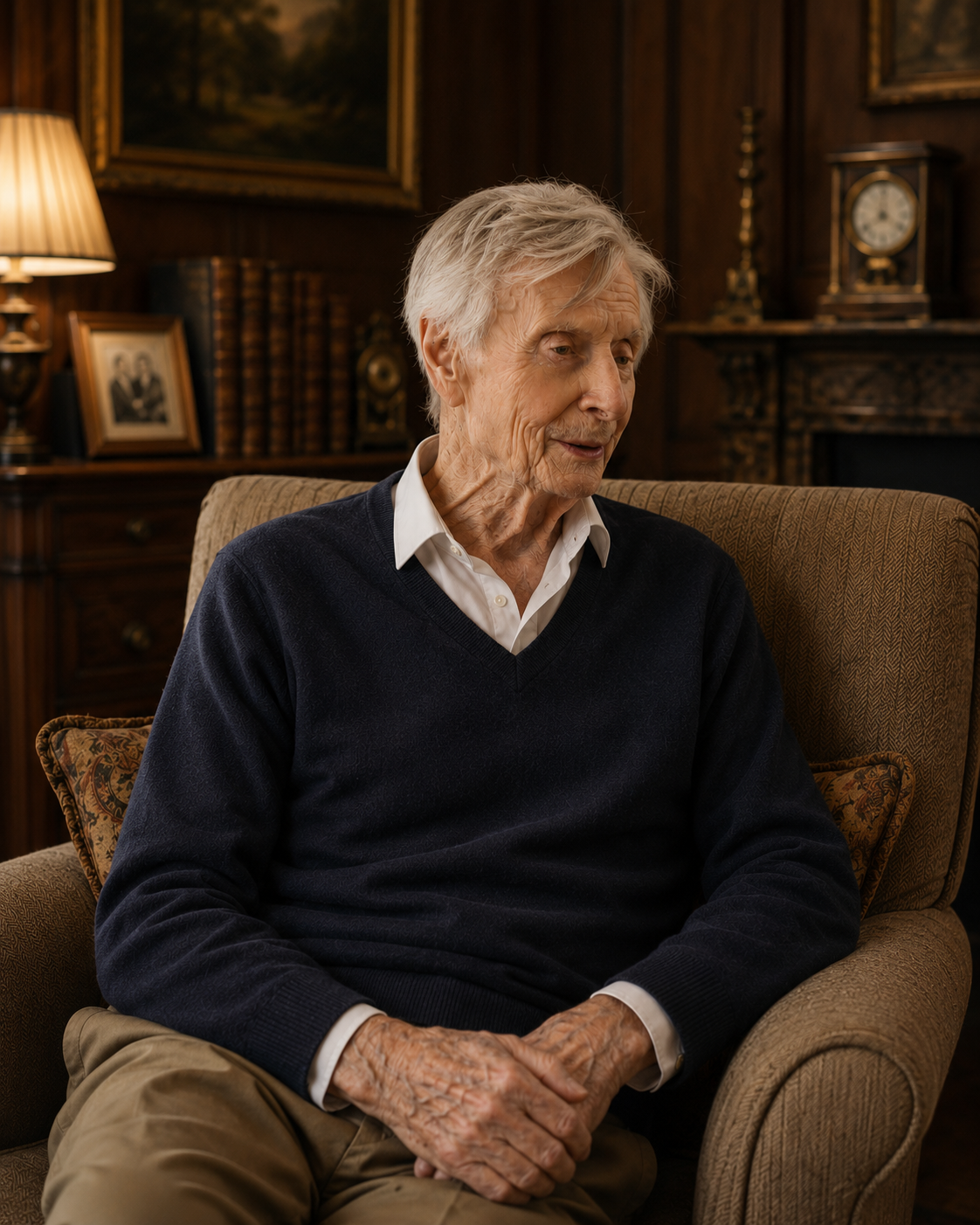
Leonard George Windmill, Honorary Chairman, expresses the family standard in direct terms: do the work, keep one’s word, retain humility and look after the family quietly over time.
His message treats Stewardship as continuing conduct rather than a duty performed once or a reputation asserted publicly. What remains is the memory of the life lived, the way others were treated and the example left to those who follow.
FAMILY PRINCIPLES
The family principles associated with Ronald Alfred Windmill were preserved through remembered words, repeated instruction and personal example. Leonard George Windmill and Steven Michael Windmill reconstructed and documented them in 2026.
The Code emphasises:
- speaking the truth plainly;
- giving one’s word sparingly and keeping it;
- performing duty, particularly when it is inconvenient;
- protecting those unable to protect themselves;
- offering honest help within one’s power;
- exercising courtesy and restraint;
- knowing one’s craft and continuing to learn;
- separating what was observed, what was reported and what was inferred;
- applying to oneself the standard required of others;
- and leaving each person, task or place better than one found it.
A Father’s Code is a family cultural and ethical source. It is neither a recovered historic document nor a company regulation, and it does not create legal or Governance Authority.
LEARNING AND CULTURAL LITERACY
Learning is a continuing responsibility rather than a completed stage of education.
Across the last three generations, family principals accumulated ten university degrees. Formal education stands alongside independent study, professional development, practical experience, reading, Research, discussion and respectful challenge.
The family’s cultural interests include visual art, museums, theatre, architecture and literature. Engagement beyond one’s principal field broadens the frames through which a problem is understood and strengthens the ability to interpret unfamiliar professional, social and institutional environments.
Cultural literacy therefore supports Knowledge, Relational and Institutional Capital as well as personal formation.
THE FAMILY NAME AND REPUTATION
The family name represents inherited reputation and continuing responsibility. It is not a title or an assertion of status.
Each generation inherits a reputation in part and contributes to the reputation inherited by the next.
Reputation is neither publicity nor self-description. It is accumulated standing created through conduct, competence, discretion, reliability and the fulfilment of commitments.
Every material act therefore contributes to, or draws upon, a continuing reputational account.
ARCHIVES, OBJECTS AND PROVENANCE
Archives preserve more than information. They retain Evidence, context, authorship, relationships and the reasoning through which earlier generations understood their circumstances.
Objects similarly possess more than physical form or financial value. Their meaning depends upon Provenance, association, memory, condition and the context in which they are transmitted.
An object sometimes survives after its meaning is lost. Cultural Stewardship protects both.
WFO distinguishes documented history, established association, preserved family memory, informed interpretation, working reconstruction and unresolved uncertainty. The family record remains no stronger than its supporting Evidence.
TIME-BINDING
Time-Binding preserves what earlier generations knew, believed and created. Stewardship determines how that inheritance informs present conduct.
Family discussion, hospitality and intergenerational conversation remain practical means through which judgement develops. Economics, politics, history, culture and family affairs are examined through discussion and respectful disagreement rather than received as fixed doctrine.
Continuity preserves what remains valuable; it does not require the preservation of every historic Map.
SERVICE AND RESPONSIBLE LIVING
Public service, charitable participation and responsible treatment of the natural environment express Stewardship beyond the family itself.
Family interests include veterans and emergency services, medical research, animal welfare, cultural and heritage institutions, environmental responsibility and community life.
Long-established habits of growing food, repairing and repurposing possessions, reducing waste and favouring responsible production reflect practical responsibility rather than public positioning.
Such activity is undertaken according to conviction, Purpose and the needs of the Territory. It is not presented as a claim to virtue or a means of purchasing recognition.
ASSURANCE WITHOUT VULNERABILITY
WFO makes sufficient history, Provenance and cultural context public to support understanding and institutional credibility.
It does not publish private archives, personal correspondence, sensitive Provenance information, protected locations, security arrangements or material whose disclosure impairs the privacy or legitimate interests of living and future generations.
Privacy does not require historical opacity. Transparency does not require indiscriminate disclosure.
RELATED RESOURCES
WFO treats Culture and Heritage as living Capital: accumulated identity, reputation, creative expression, history and cultural understanding. The Office preserves, develops and applies that inheritance in the present and transmits it with sufficient Provenance and context for future generations to exercise Stewardship of their own.